English
Global Fidget Toys Innovation OEM Factory for 2026 Wholesale Market
Writer:admin Time:2026-06-28 20:27 Browse:views
The global fidget toy industry is entering a new phase in 2026, shifting from simple sensory gadgets into a hybrid category that blends stress relief, education, collectability, and digital engagement. For OEM factories and wholesale buyers, this market is no longer about “cheap toys”—it is about innovation-driven product lines, fast trend response, and brand customization capability.
This article provides a complete overview of the 2026 global fidget toy OEM landscape, including product innovation trends, manufacturing capabilities, market segmentation, and wholesale strategies. It is designed for distributors, Amazon/TikTok sellers, importers, and toy brands seeking scalable OEM partners.
1. Global Fidget Toys Market Overview (2026)
The fidget toy market has evolved rapidly since 2020, driven by mental wellness awareness, short-video platforms, and classroom sensory needs. In 2026, the industry is estimated to be structured around three major pillars:
Stress relief & mental wellness products
Collectible viral toys (TikTok-driven trends)
Educational sensory tools (schools & therapy markets)
Unlike earlier years, 2026 demand is no longer dominated by a single product (like pop-it). Instead, the market is fragmented into micro-trends lasting 3–9 months.
Table 1: 2026 Global Fidget Toy Market Segmentation
| Segment | Market Share | Key Buyers | Growth Driver |
|---|---|---|---|
| Stress Relief Toys | 35% | Adults, office workers | Anxiety & work pressure |
| Viral TikTok Toys | 30% | Gen Z, retail buyers | Short video trends |
| Educational Sensory Toys | 20% | Schools, therapy centers | Special education demand |
| Collectible Fidgets | 10% | Toy collectors | Blind box & rarity systems |
| Premium OEM Brands | 5% | Retail chains | Branding & customization |
2. Key Innovation Trends in Fidget Toys OEM (2026)
OEM factories must move beyond traditional molds and low-cost plastics. The 2026 innovation wave is defined by multi-sensory design + smart materials + hybrid functionality.
2.1 Material Innovation
Factories are shifting from basic TPR and silicone to:
Thermochromic materials (color change with heat)
Glow-in-the-dark compounds (UV reactive)
Magnetic composite structures
Liquid gel encapsulation systems
Eco-friendly biodegradable polymers
These materials significantly increase perceived value and retail pricing.
2.2 Structural Innovation
Modern fidget toys are no longer single-action products. They now integrate:
Multi-click mechanical systems
Rotational + sliding hybrid modules
Modular assembly toys
Interlocking transformation designs
2.3 Sensory Expansion
Fidget toys in 2026 are designed around multi-sensory stimulation:
Touch (texture variation)
Sound (mechanical click feedback)
Vision (color change / LED effects)
Resistance (elastic deformation control)
Table 2: OEM Innovation Types in 2026
| Innovation Type | Example Product | Manufacturing Difficulty | Price Impact |
|---|---|---|---|
| Material Upgrade | Glow squishy ball | Low | +20% |
| Mechanical System | Gear spinner cube | Medium | +40% |
| Modular Design | Assemble fidget kit | High | +70% |
| Smart Fidget Toy | LED sensor toy | Very High | +120% |
| Collectible Series | Blind box fidgets | Medium | +50% |
3. OEM Factory Capabilities Required in 2026
To compete in global wholesale markets, an OEM factory must no longer be just a production site—it must act as a trend response and product development center.
3.1 Core Manufacturing Capabilities
A competitive factory should support:
Injection molding (multi-cavity molds)
Silicone compression molding
Assembly line customization
Printing & branding (UV, pad print, laser)
Packaging design & blind box systems
3.2 R&D Requirements
Modern buyers expect:
7–15 day sample development cycle
Trend replication within 30–45 days
Ability to reverse-engineer viral TikTok products
Internal design team for new concepts
3.3 Quality Control Standards
EN71 (EU toy safety standard)
ASTM F963 (US toy safety standard)
REACH compliance for chemical safety
Drop-test & durability testing
Table 3: OEM Factory Capability Benchmark (2026)
| Capability Area | Basic Factory | Competitive OEM Factory | Top Tier Innovation Factory |
|---|---|---|---|
| Sample Time | 20–30 days | 10–15 days | 5–10 days |
| Mold Development | External | In-house partial | Fully in-house |
| Design Team | None | 1–3 designers | Dedicated R&D studio |
| Trend Response | Slow | Medium | Fast (TikTok-driven) |
| Custom Branding | Limited | Full OEM | Full + IP co-development |
4. Wholesale Market Channels in 2026
The distribution landscape has changed significantly due to social commerce platforms.
4.1 TikTok Shop & Short Video Commerce
Fast-moving viral products
High demand for visually satisfying fidgets
Influencer-driven spikes (7–14 day cycles)
4.2 Amazon & Shopify DTC Brands
Require stable SKU supply
Focus on packaging quality and brand story
Prefer exclusive designs
4.3 Offline Wholesale (US/EU Toy Distributors)
Large bulk orders (5000–100,000 pcs)
Stable reorder cycles
Focus on certification and safety compliance
4.4 Educational & Therapy Supply Chains
Schools and occupational therapy clinics
Require durability and safety certifications
Long lifecycle products
Table 4: Wholesale Channel Comparison (2026)
| Channel | Order Volume | Price Pressure | Product Type | Stability |
|---|---|---|---|---|
| TikTok Shop | Low–Medium | High | Trend toys | Low |
| Amazon Sellers | Medium | Medium | Branded fidgets | Medium |
| Wholesale Distributors | High | Low | Standard SKUs | High |
| Education Market | High | Low | Sensory tools | Very High |
5. Top-Selling Fidget Toy Categories in 2026
OEM factories must prioritize product lines that can scale across multiple markets.
5.1 Core Product Categories
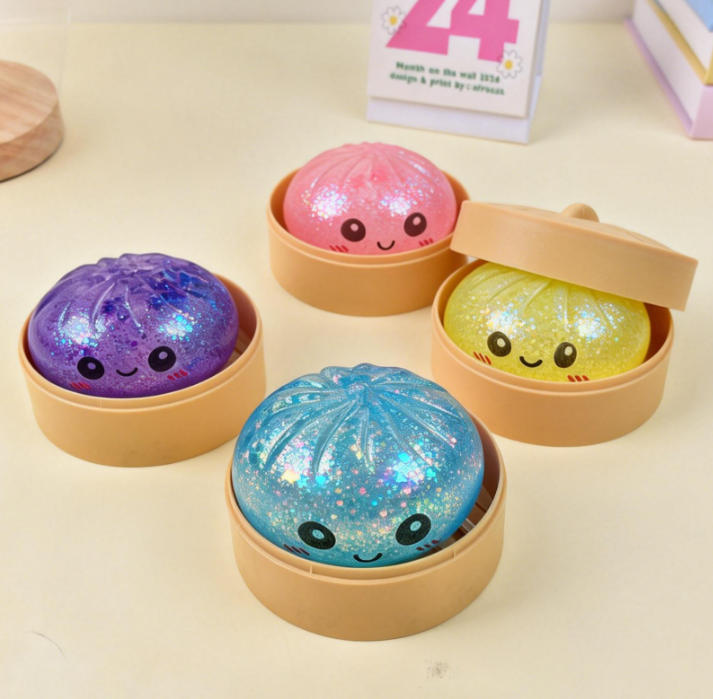
Squishy stress toys (gel-filled, soft TPR)
Magnetic fidget cubes & rings
Pop tubes & sensory tubes
Transformable mechanical toys
Keychain mini fidgets
5.2 Viral Product Formats
“Satisfying click” toys (sound-based appeal)
ASMR-style squeeze toys
Blind box fidget collections
Interactive desk toys for office workers
5.3 Premium OEM Lines
LED light-up sensory toys
Smart pressure sensor fidgets
Educational STEM fidget kits
6. Pricing Strategy for OEM Fidget Toys (2026)
Pricing depends heavily on material complexity and branding level.
Basic fidget toys: $0.20 – $0.80 ex-factory
Mid-range OEM designs: $0.80 – $2.50
High innovation products: $2.50 – $6.00
Smart fidget toys: $5.00 – $12.00
Margins increase significantly when factories provide design + packaging + branding services together.
7. Challenges in the 2026 OEM Fidget Toy Industry
Despite strong demand, factories face several challenges:
7.1 Trend Volatility
Products can go viral and disappear within weeks.
7.2 Copycat Competition
Fast imitation reduces product lifecycle.
7.3 Compliance Pressure
EU and US regulations are becoming stricter on:
Chemical safety
Small parts choking hazards
Labeling requirements
7.4 Rising Material Costs
Specialty silicone, magnetic materials, and packaging costs are increasing.
8. Future Outlook: 2027 and Beyond
The fidget toy OEM industry is expected to evolve into three directions:
8.1 Smart Fidget Ecosystem
Integration with apps, sensors, and gamification.
8.2 Wellness + Medical Use Expansion
Stress therapy, ADHD support tools, and rehabilitation devices.
8.3 Brand-Driven OEM Model
Factories becoming co-creators of global toy brands instead of just suppliers.
Conclusion
The 2026 global fidget toy OEM market is no longer a simple low-cost manufacturing industry. It is becoming a fast-moving innovation ecosystem driven by social media, sensory psychology, and brand differentiation.
OEM factories that succeed will be those that can:
Rapidly develop viral-ready products
Offer multi-material and multi-sensory innovation
Support branding and packaging systems
Respond quickly to TikTok-driven demand cycles
In short, the future belongs to innovation factories, not just production factories.
Related Article
CATEGORIES
LATEST ARTICLES
- Global Fidget Toys Innovation OEM Factory for 2026 Wholesale Market
- AI Emotion Smart Interactive Toys Manufacturer OEM for Wellness Industry
- Adult Minimal Focus Anti Stress Toys Manufacturer OEM for Professionals
- Fidget Gift Box Seasonal Viral Sets Manufacturer OEM for Retail Market
- Soft Plush Emotional Squishy Toys Manufacturer OEM for Kids Market
CONTACT US
Whatsapp: +8618998453346
Phone: +8618998453346
Tel: +8618998453346
Email: [email protected]
Addr: Tianhe Guangzhou China
Hot Goods
 <
<
<
<
<
<
<
<
<
<
<
<
<
<
<
<
<
<
<
<